Why reviews matter for a practice
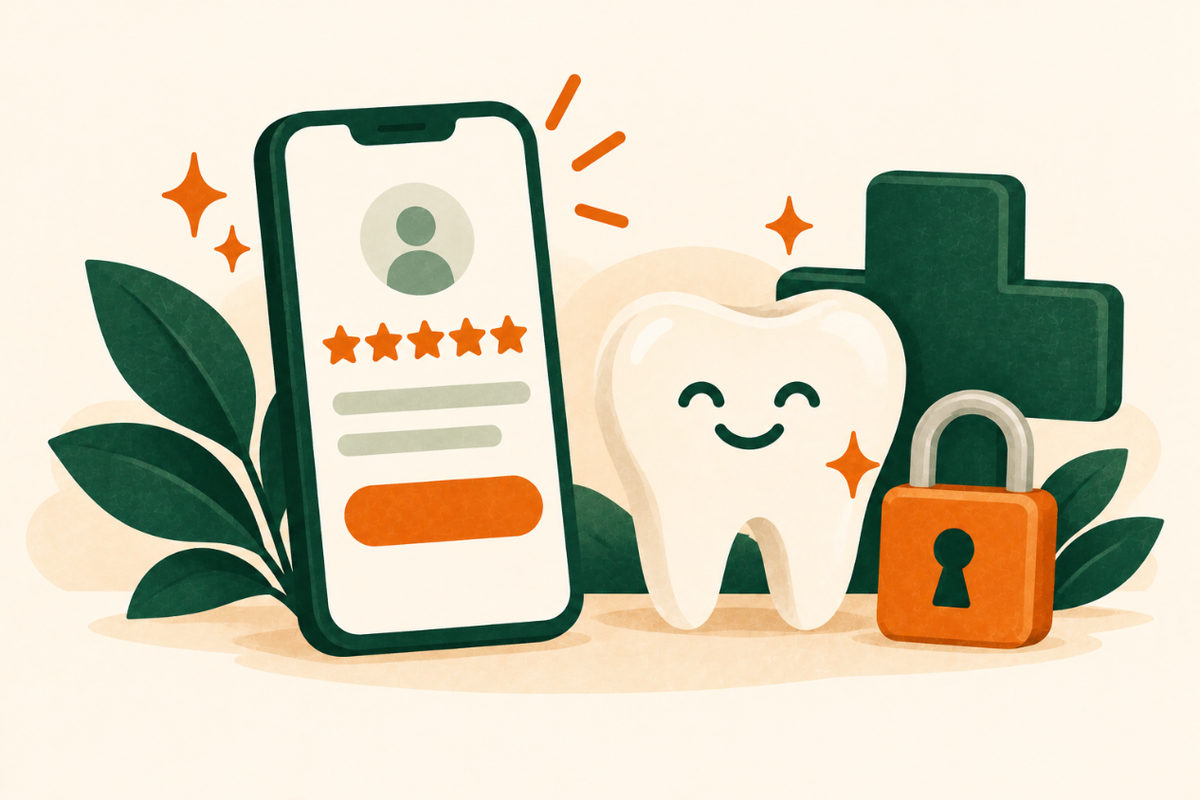
Google says that more reviews and positive ratings can help a business’s local ranking, and it counts reviews as part of prominence, one of the three things behind local results. On top of that, reviews are what new patients read when they compare two practices that look the same on the map.
Replying matters too. Google notes that replying to reviews shows you value feedback. A short, calm reply under every review tells future patients that someone at the practice is listening.
- More reviews can help you appear for more local searches.
- Recent reviews reassure people that the practice is active.
- Your replies are read by future patients, not only by the reviewer.
How to ask, the right way
The practices with the most reviews are the ones that ask every patient, every time, in the same way. Make it a routine at checkout rather than something you remember once a month.
Google’s rules say you can’t discourage negative reviews or ask only the patients you expect to be happy, and you shouldn’t pressure people to write a review while they are still at your office. So ask everyone, make it easy, and let them do it later.
- Get your review link from your Google Business Profile and turn it into a short link or QR code.
- Ask in person at checkout with one sentence, then send the link by the contact method the patient agreed to.
- Ask every patient, including the ones who seemed unhappy.
- Never require a review before, during or after a visit.
What you can’t do
Google does not allow reviews that are paid for, directly or in kind, or rewards such as payments, discounts or free services in exchange for a review. The FTC’s rule on consumer reviews, in force since October 21, 2024, bans fake reviews, buying reviews and rewards that depend on a review being positive or negative, and it allows civil penalties.
Reviews from people with a conflict of interest, such as current or former staff, also break Google’s rules. Keep it simple: real patients, real experiences, nothing in return.
- No discounts, gifts, prize draws or free services for reviews.
- No reviews from staff, family or business partners.
- No buying reviews, and no writing them yourself.
- No threats or pressure to remove a negative review.
How to reply without revealing patient information
This is where practices get into real trouble. The US Department of Health and Human Services settled with a Dallas dental practice for $10,000 in 2019 after its replies to Yelp reviews disclosed patients’ information, and with New Vision Dental in California for $23,000 in 2022 over replies that revealed visit and insurance details.
The safe habit is to reply as if you don’t know who wrote the review. Don’t confirm that the person is a patient, don’t mention treatment, dates, prices or insurance, and move any complaint to a private phone call. This is general information, not legal advice; ask your compliance adviser if you are unsure.
- Thank the reviewer without saying “thanks for visiting us” or naming any care.
- For a complaint, give a phone number or email for a private conversation.
- Never argue with details of a visit in public, even if the review is unfair.
- Keep one approved reply for positive reviews and one for negative ones, so anyone on the team can reply safely.
What to do about negative or fake reviews
Negative reviews happen to good practices. A calm reply and a private follow-up often matter more to future patients than the review itself. If a review breaks Google’s policies, for example it is fake, off-topic or from someone with a conflict of interest, you can report it from your Business Profile and ask Google to review it.
- Reply within a few days with your private contact details.
- Report reviews that break Google’s policies instead of arguing with them.
- Keep asking every patient; new reviews put an old bad one in context.
Two replies you can copy
These replies thank the reviewer and offer help without confirming that anyone is a patient. Adapt the wording, then use them for every review.
Example replies
Thank you for taking the time to share your feedback.
For a positive review: “Thank you for taking the time to leave a review. We appreciate it.” For a negative review: “Thank you for your feedback. We take every concern seriously and would like to talk with you directly. Please call our office manager at [phone number].”
Copy and adaptExample wording to adapt; this is not a live business enquiry.
Your checklist
Use this while reviewing the website. Your progress is not saved or sent.
Questions to work through
Can I ask only my happiest patients for a review?
No. Google’s rules say businesses can’t selectively ask for positive reviews or discourage negative ones. Ask every patient the same way.
Can I offer a small discount for a review?
No. Google removes incentivized reviews, and the FTC’s rule bans rewards that depend on a positive review.
Is it fine to reply “Thanks for visiting us, see you at your next cleaning”?
Avoid it. That confirms the person is a patient and mentions their care. A generic thank-you is safer.
Can I get a bad review removed?
Only if it breaks Google’s policies, for example if it is fake or posted by someone with a conflict of interest. Report it from your Business Profile. Otherwise, reply calmly and keep collecting new reviews.
Sources and further reading
Use the original guidance alongside this planning article. The examples here are adaptable starting points, not claims about your business.
- Google Business Profile Help: Tips to improve your local ranking on Google
- Google Maps content policy: Prohibited and restricted content (fake engagement)
- FTC: Final rule banning fake reviews and testimonials (August 14, 2024)
- FTC: The Consumer Reviews and Testimonials Rule, questions and answers
- HHS: Dental practice pays $10,000 to settle social media disclosures of patients’ health information (October 2, 2019)
- HHS: Settlement with New Vision Dental over disclosures in online review replies (2022)