
What does a real estate agent website need?
A real estate agent website needs to say where you work and who you help, show proof you’re good at it and make the first step easy. Listings alone don’t do that, because a buyer can see the same listings anywhere.
- A first screen naming your area, who you help and one button.
- An about page with your photo, your story and how long you’ve worked the area.
- A page for buyers and one for sellers, each explaining the steps.
- Reviews and recent sales, real ones only.
- Neighborhood pages with plain local information.
- A phone number you can tap and a short contact form.
What should the first screen of a real estate agent website say?
It should name your area, who you help and the next step. In our opinion, “Helping first-time buyers find a home in Frisco” does more than “Your dream home awaits”, which could be any agent anywhere.
Use one main button, such as “Get a free home value” or “Talk about buying”, and check that it shows on a phone without scrolling. Most visitors arrive on one.
Real estate website examples
We haven’t built a real estate agent site yet, so here are two things to look at: a property-style sample we designed, and a live site we built for a client in another field. Notice how fast each one tells you who it’s for and what to do next.
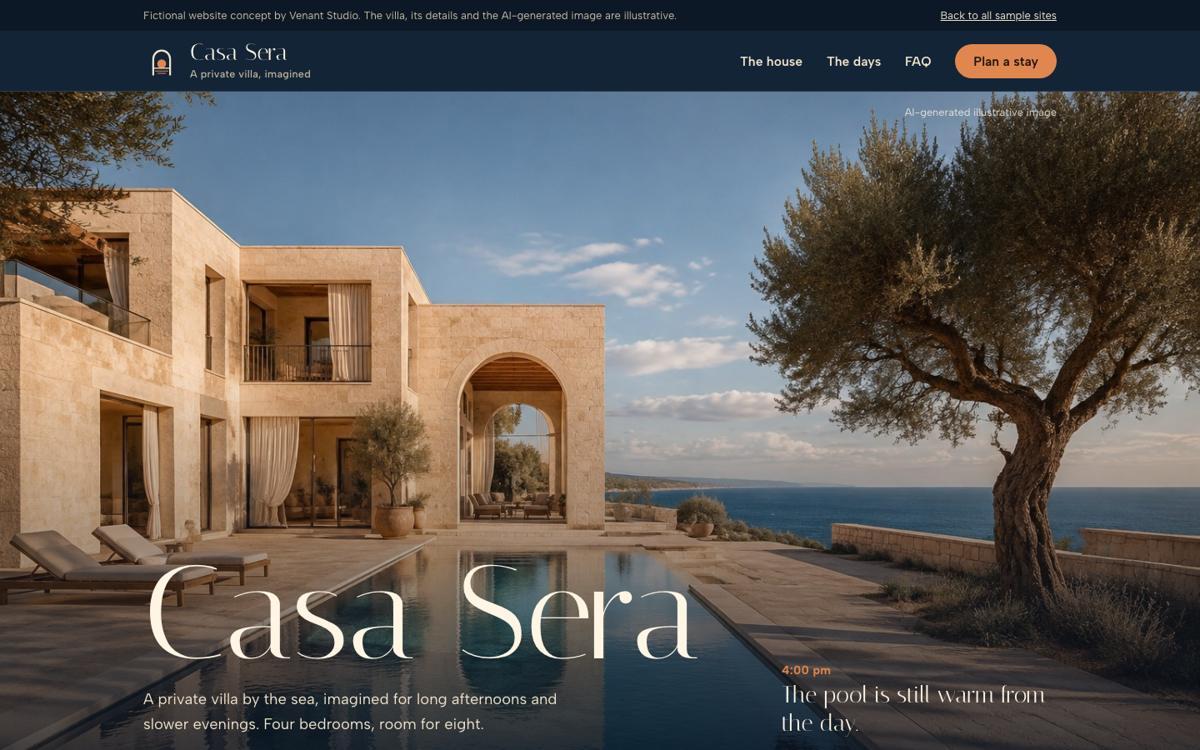
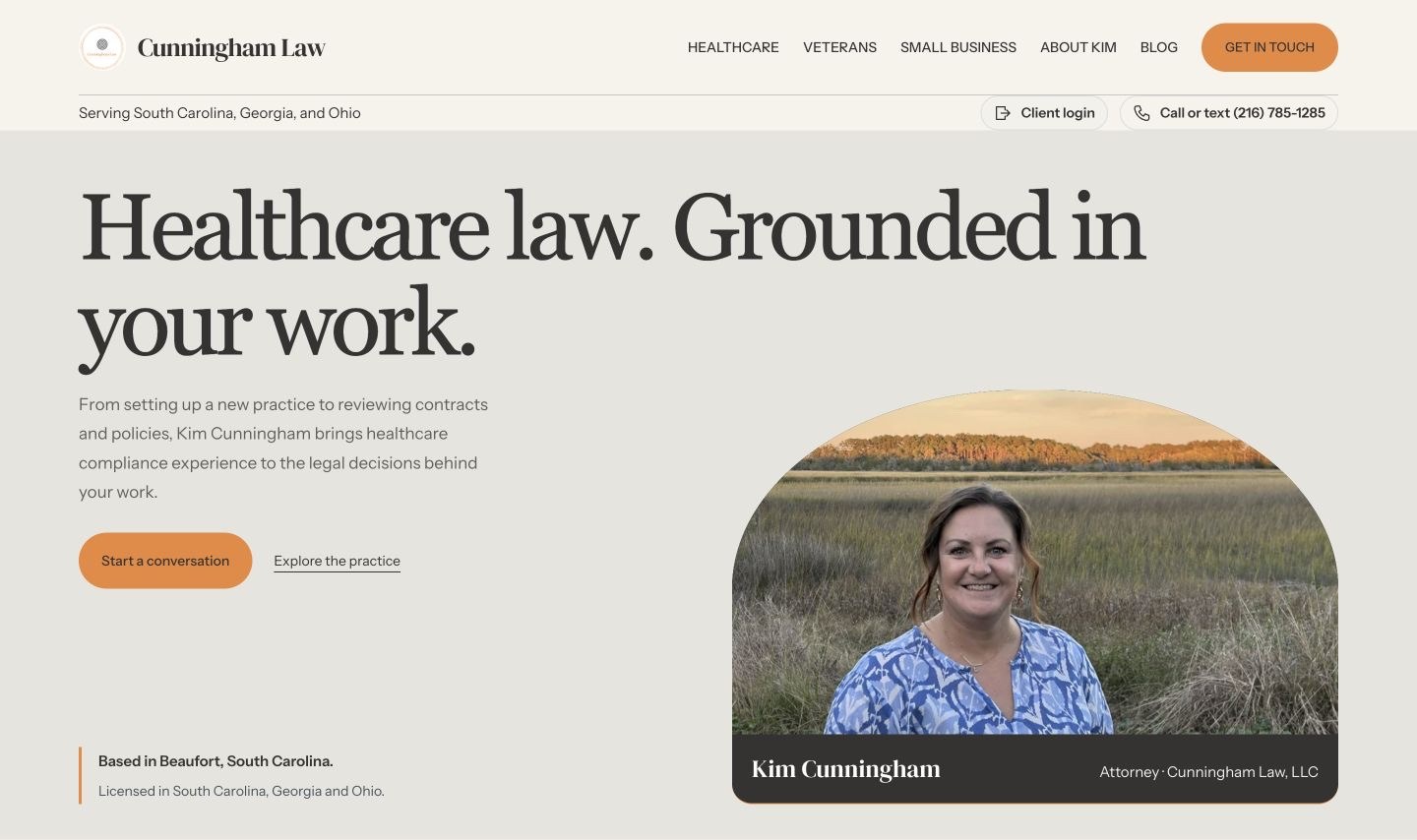
Want to see your own business this way before deciding anything? Send us your details and we’ll design your homepage and send you a private link within 3 business days, free.
Which pages should a real estate agent website have?
Give buyers and sellers their own pages, and add a page for each area you serve. People search for a town or neighborhood, so a page for each gives search engines something specific to show.
On each area page, write what you actually know: the streets, schools you’d point a client to, commute times, what homes tend to look like. Keep it factual, and see the fair housing section below before you describe who lives there.
How do you make the first step easy?
Offer one or two low-pressure ways in: a short call, a home value request or a buyer consultation. In our opinion, a form with a name, a phone number and one question gets more answers than one with ten fields.
Say what happens next and when: “I’ll call you within one business day.” Then do it. A visitor who gets a quick, human reply is far more likely to stay with you.
What does fair housing mean for a real estate agent website?
Your website is advertising, so the Fair Housing Act applies to it. The federal rule, 24 CFR 100.75, bars any advertisement about a dwelling that “indicates any preference, limitation or discrimination” because of a protected characteristic.
The rule says that includes using “words, phrases, photographs, illustrations, symbols or forms” that convey a dwelling is available or not available to a particular group. In practice, describe the home and the neighborhood, not the kind of person who belongs there, and check your photos too.
Can a real estate agent use client reviews on a website?
Yes, if they’re real. The FTC’s staff guidance says a business could be liable if it wrote or created fake or false reviews, or purchased consumer reviews it knew or should have known were false.
It also says to ask insiders, such as family members or employees, to clearly and conspicuously disclose their relationship to your business. Keep your state commission’s advertising rules in mind too, and get a client’s permission before using their name or photo.
Does a real estate agent need a Google Business Profile?
Yes, it’s worth having one, within Google’s rules. Google lists real estate agents as individual practitioners, and says a practitioner shouldn’t have multiple profiles to cover all of their specializations.
If you’re the only public-facing agent at a branded office, Google says to name the profile “[brand/company]: [practitioner name]”. It also says marketing taglines aren’t allowed in the name, so skip “Top producer” and similar.
Does a real estate agent website need to be accessible?
Plan on it. The Department of Justice says the ADA’s requirements apply to all the goods, services, privileges or activities offered by public accommodations, which it says includes web content.
Its guidance names barriers to check: poor color contrast, images without text alternatives, videos without captions, form fields without labels and sites that only work with a mouse. Listing photos need alternative text that describes the room.
An example first screen
For a hypothetical agent. Swap in your own area, focus and phone number.
Example homepage opening
Helping first-time buyers find a home in Frisco
I’ll explain every step in plain words and answer your calls the same day. [Talk about buying] [Call (972) 555-0143]
Plan your first screenExample wording to adapt; this is not a live business enquiry.
Your checklist
Use this while reviewing the website. Your progress is not saved or sent.
Questions to work through
How many pages does a real estate agent website need?
Usually home, about, buyers, sellers, a page for each area you serve and contact, in our opinion. Start with the areas where you want the most clients and add more over time.
Does a real estate agent need their own website if their brokerage gives them a page?
A brokerage page is useful, but it usually looks like every other agent’s page. In our opinion, your own site lets you choose your wording, areas and proof, and you keep it if you change brokerages, though your broker’s rules may apply.
What do fair housing rules mean for real estate ads?
Federal rule 24 CFR 100.75 bars ads that indicate a preference, limitation or discrimination because of a protected characteristic, including through words, photographs or symbols. Describe the property, not who should live there.
Can I use client reviews on my real estate website?
Yes, if they’re real. The FTC says a business can be liable for writing fake reviews or buying reviews it knew or should have known were false.
Can I see what my real estate website would look like before paying?
Yes. Venant Studio offers a free homepage sample: send your details and we’ll design your homepage and send a private link within 3 business days. It’s a sample to look at, not a finished site.
Sources and further reading
Use the original guidance alongside this planning article. The examples here are adaptable starting points, not claims about your business.
- Cornell LII: 24 CFR 100.75, Discriminatory advertisements, statements and notices (Fair Housing Act)
- FTC: Consumer Reviews and Testimonials Rule, questions and answers
- Google Business Profile Help: Guidelines for representing your business on Google
- ADA.gov: Guidance on web accessibility and the ADA
- Venant Studio: Casa Sera, a sample villa website (fictional concept)
- Cunningham Law: a live client website