
What does a therapist website need?
A therapist website needs to say who you help and where, show who you are, and explain the first session and your fees. It also needs a private way to get in touch and a clear note about what to do in a crisis.
- A first screen naming who you help, your state or city, and one button.
- A short page for each main concern you treat.
- An about page with your photo, license and approach.
- What the first session is like.
- Fees, insurance and the good faith estimate notice.
- A short contact form and a crisis note.
What should the first screen of a therapist website say?
It should name the people you help, where you see them and the next step. In our opinion, “anxiety counseling for adults in Austin, in person or online” does more than “a safe space for healing”, which could describe anyone.
Use one main button, such as “Request a free phone consultation”, if you offer one. Check that it shows on a phone without scrolling.
Therapist website examples
We don’t have a counseling sample yet, so here are the two closest things we’ve built. Notice how quickly each one tells you who it’s for and what to do next.
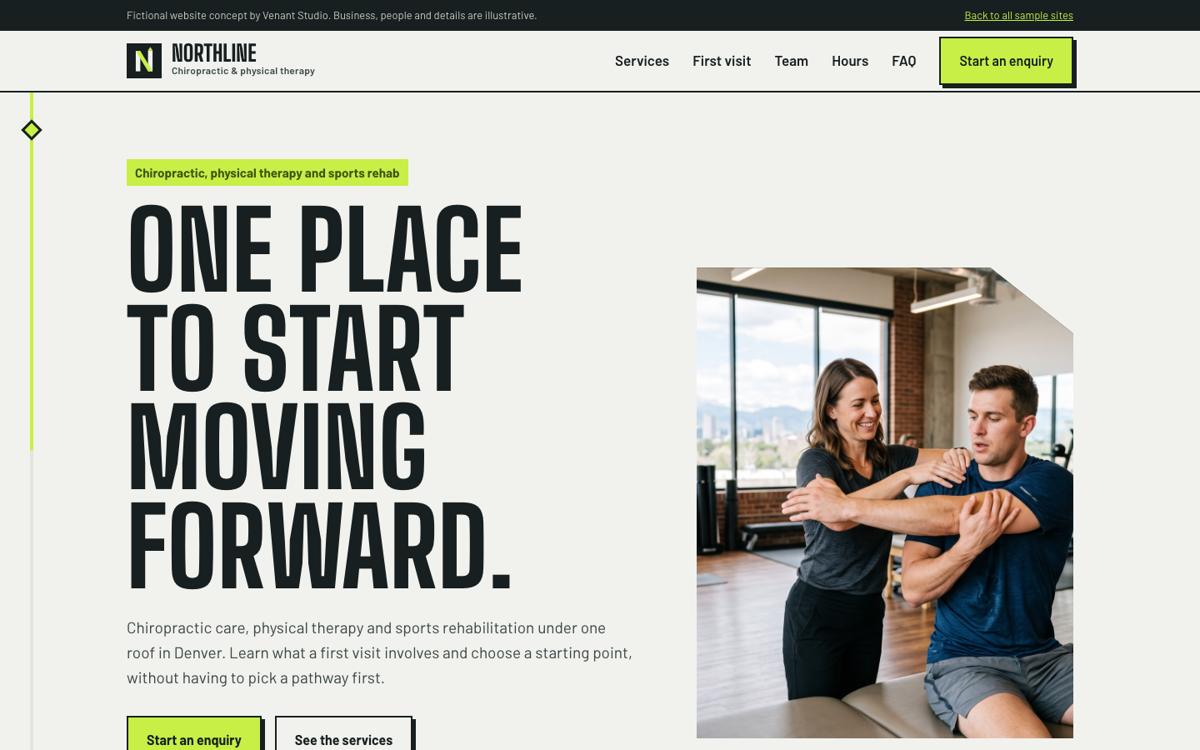
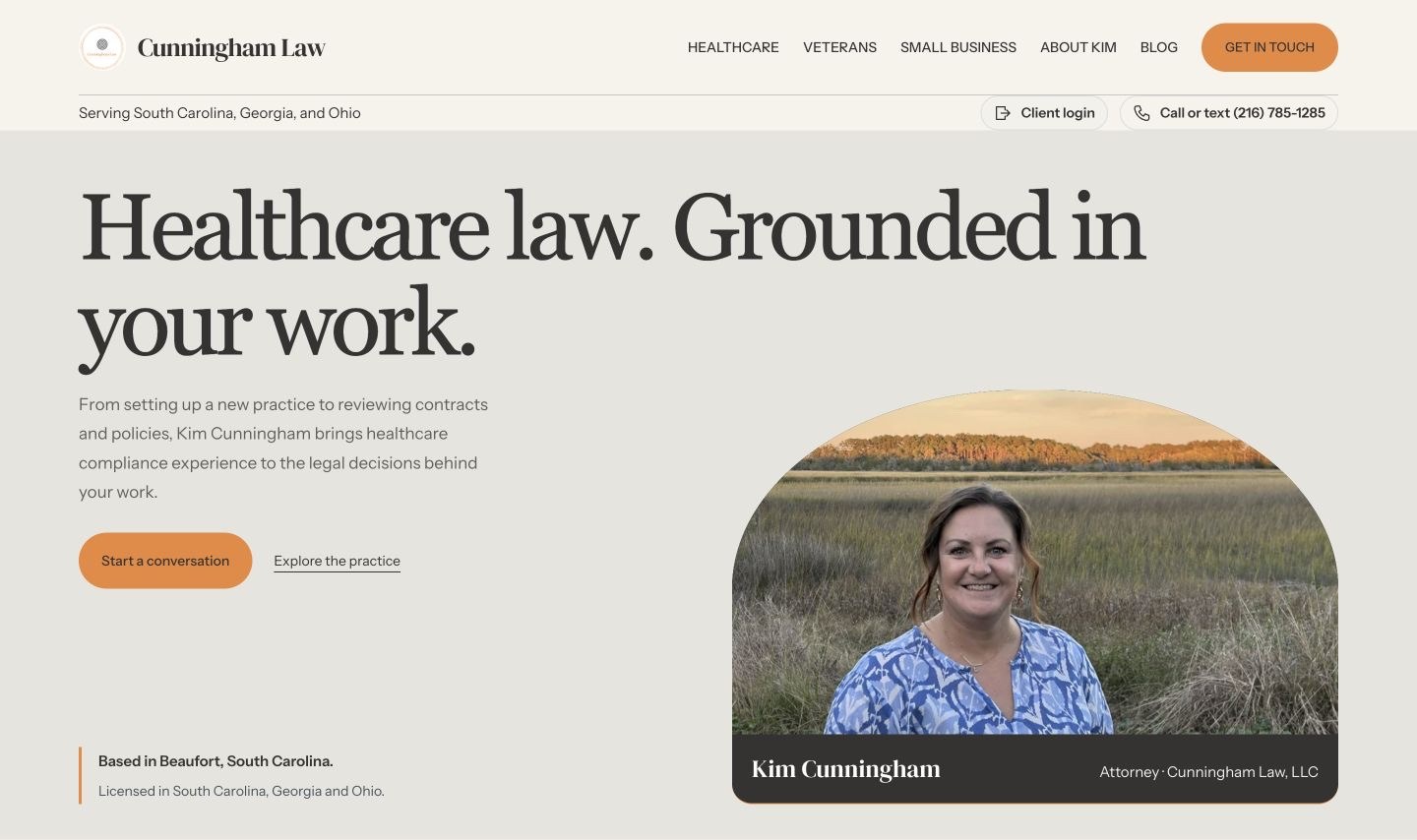
Want to see your own practice this way before deciding anything? Send us your details and we’ll design your homepage and send you a private link within 3 business days, free.
How do you show a client you’re the right fit?
Write to the person reading, in the words they would use, before you talk about your training. Then show your face, your license and the states where you can see clients.
Give each main concern its own page, such as anxiety, couples or grief. A page like that can answer one person’s question and give search engines something specific to show.
What should you say about the first session?
Say how long it lasts, what you’ll talk about and whether it’s in person or online. People who have never been to therapy often don’t know what happens, and a few plain sentences can make that first step smaller.
Should a therapist website list fees and insurance?
In our opinion, yes: state your session fee and which insurance you take, or say that you’re out of network. People who can’t afford you find out early, and the ones who contact you already know.
If you see uninsured or self-pay clients, the federal rule goes further. Information about good faith estimates must be “prominently displayed” on your website, in the office and where scheduling happens, and be easy to find from a public search engine. CMS says people should get an estimate when they schedule at least 3 business days ahead.
How do you keep a therapist contact form private?
Ask for little: name, a way to reach them and a preferred time. In our opinion, the public form shouldn’t ask why they’re seeking therapy, and a note beside it should ask them not to share clinical details.
Check your trackers too. HHS says tracking tools on logged-in pages, such as a client portal or telehealth platform, generally have access to protected health information. A 2024 court order vacated part of that guidance for public pages, so ask a lawyer how it applies to you.
Add a crisis note near the form, because you may not see a message for hours or days. The 988 Lifeline takes calls, texts and chats and says it’s available 24/7/365.
Can a therapist website use testimonials?
Be careful, because your profession’s rules may limit them. The American Psychological Association’s ethics code says psychologists “do not solicit testimonials from current therapy clients/patients”.
Counselors, social workers and marriage and family therapists should check their own code and state board. Your license, training and clear writing can build trust without any client’s words.
Does a therapy practice need a Google Business Profile?
If you see clients at a real location, it’s worth setting one up, within Google’s rules. Google says a virtual office isn’t eligible, and a co-working office needs clear signage, staff and customers received during business hours.
A practitioner shouldn’t have several profiles for different specialties. A group at one location should have a profile for the practice, and a business that operates only by appointment shouldn’t list hours.
Does a therapist website need to be accessible?
Plan on it. The ADA covers businesses open to the public, and ADA.gov says inaccessible website features can limit people’s access to what a business offers.
The barriers it names are easy to check for: poor color contrast, missing alt text on images, videos without captions and online forms without labels. Soft, pale designs are popular with therapists, so test your text contrast.
An example first screen
For a hypothetical solo counselor. Swap in your own focus, area, consultation terms and phone number.
Example homepage opening
Counseling for adults with anxiety, in Austin and online across Texas
Weekly sessions with one licensed counselor. Free 15-minute phone consultation, so you can see if we’re a good fit. [Request a consultation] [Call (555) 010-2471]
Plan your first screenExample wording to adapt; this is not a live business enquiry.
Your checklist
Use this while reviewing the website. Your progress is not saved or sent.
Questions to work through
Do therapists need a website if they’re listed in directories?
In our opinion, yes, if you want clients to choose you rather than scroll on. A directory profile is short and sits beside other therapists, while your own site can explain your approach, your first session and your fees.
How many pages does a therapist website need?
Usually a handful, in our opinion: home, about, one page for each main concern, fees and contact. Start small and add a page when clients keep asking the same question.
Does a private practice therapist website need a good faith estimate notice?
If you see uninsured or self-pay clients, the federal rule says the information must be prominently displayed on your website. Check how it applies to your practice with your board or a lawyer.
Should a therapist website have a crisis message?
We think so. Say that you can’t respond to emergencies through the site, and point people to 911 or the 988 Lifeline, which takes calls, texts and chats.
Can I see what my practice’s website would look like before paying?
Yes. Venant Studio offers a free homepage sample: send your details and we’ll design your homepage and send a private link within 3 business days. It’s a sample to look at, not a finished site.
Sources and further reading
Use the original guidance alongside this planning article. The examples here are adaptable starting points, not claims about your business.
- 45 CFR 149.610: Good faith estimates for uninsured (or self-pay) individuals
- CMS: Good faith estimates
- American Psychological Association: Ethics Code, Standard 5 (advertising and other public statements)
- HHS: Use of online tracking technologies by HIPAA covered entities and business associates
- 988 Suicide & Crisis Lifeline
- ADA.gov: Guidance on web accessibility and the ADA
- Google Business Profile Help: Guidelines for representing your business on Google
- Venant Studio: Northline, a sample chiropractic and physical therapy website (fictional concept)
- Cunningham Law: a live client website